Back
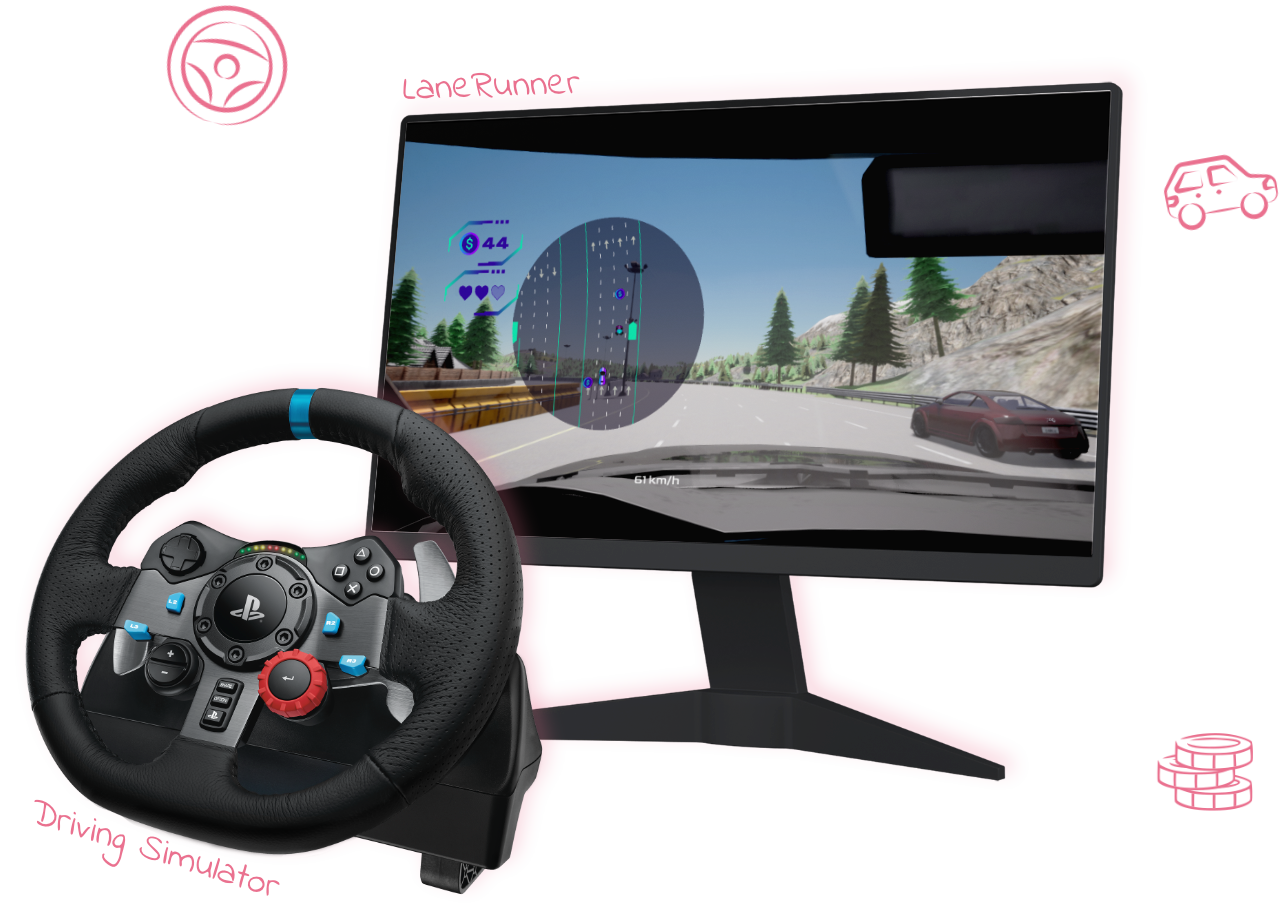
A simulated car dashboard with the LaneRunner game, showing the road, surrounding vehicles, an avatar, coins, lives, and score information.

Automotive UX · Gamification · User Research

LaneRunner

How can a driver stay connected to the road in automated driving scenarios? Simple. A HUD game that turns live traffic into playful cues.

Published at IEEE IV 2026
Contributions
❥ Project management
❥ Visual and study design lead
❥ Development of the UI inside CARLA
Outcome
❥ Open-source prototype
❥ User study with 20 participants
❥ IEEE IV 2026 paper

The question

How can we keep drivers engaged during autonomous driving?

In Level 3 automated driving, people can turn their attention elsewhere but still need to understand the road when a takeover is requested. LaneRunner explores whether a glanceable, road-linked game can help maintain that awareness without becoming another distraction.

01

Reframe the handover problem

Level 3 automation changes driving into a strange in-between state: people may look away and do something else, yet they still need to take control when the system asks. The longer they disconnect from the road, the harder it can be to understand the situation they are returning to.

That created a careful design challenge. We wanted to keep the environment present in the driver's mind without demanding constant attention or adding another distracting screen.
02

Make real traffic the game mechanic

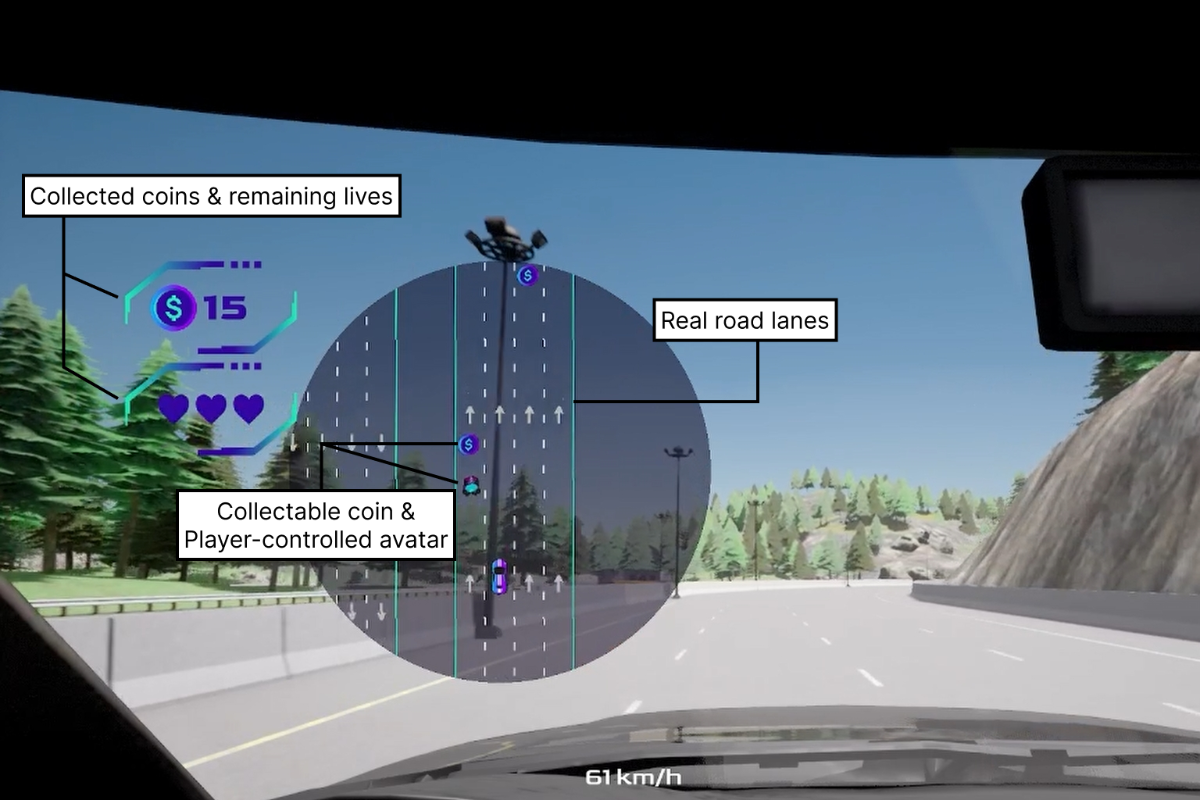
Using gamification, we created LaneRunner which is directly connected to the CARLA simulator. Lane position, speed, nearby traffic, and collisions continuously shape what happens inside the HUD game.

An avatar follows the car's movement, freely jumping across lanes. Collecting coins awards the player with points, surrounding vehicles become obstacles. Visible lane markings and speed limits reinforce details that matter outside the game too.

The gameplayPlayers can control the avatar through a keyboard, collect coins, and avoid colliding with other vehicles.
03

Design moments that know when to disappear

The gamification should be easy to see, while still allowing the driver to view the road.

The most important interaction is the pause. LaneRunner stops automatically as soon as a takeover begins, then uses a short countdown before returning. The experience supports awareness during automation and becomes quiet when driving needs the user's full attention.

04

Put the concept under takeover pressure

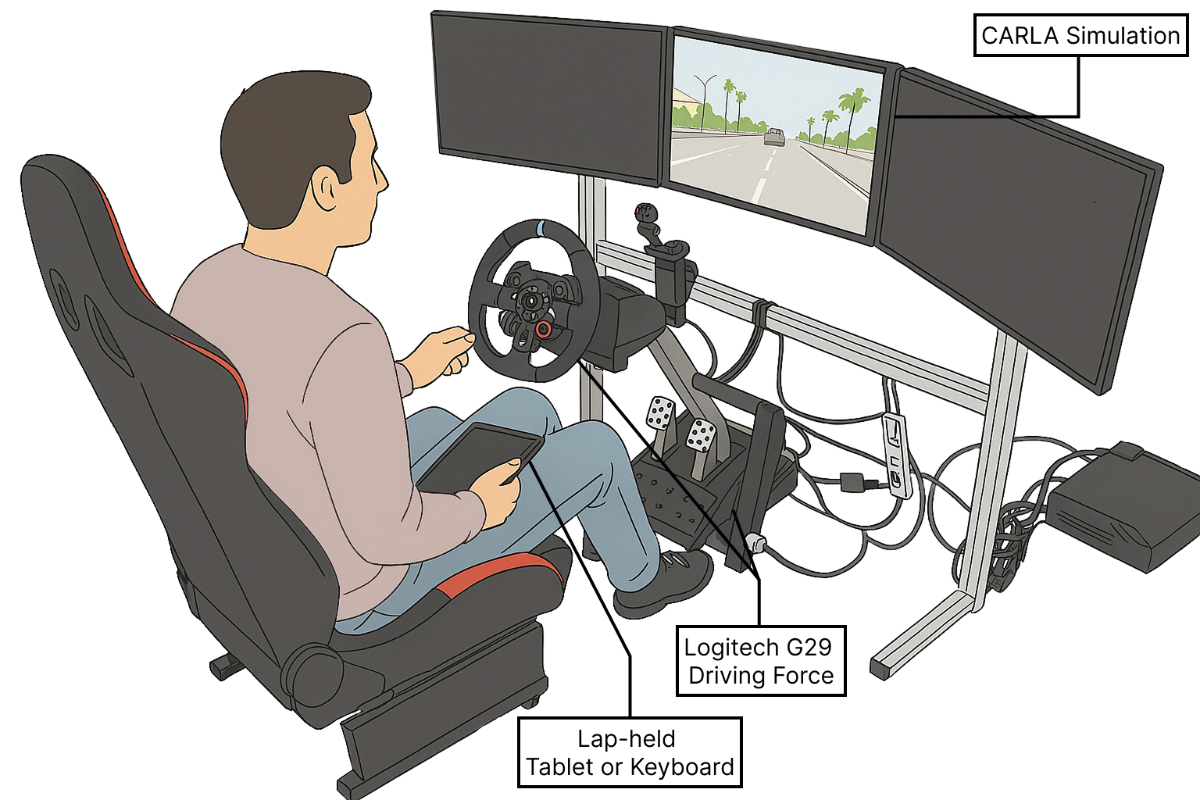
We tested LaneRunner with 20 participants in a fixed-base driving simulator. Half played LaneRunner, the other half watched comedy videos. Every drive included two takeover events.

Rather than asking only whether the game was fun, we looked at the transition back to driving: first reactions, steering stability, recall of the road, trust, workload, and what participants said afterward.

A participant using a driving simulator equipped with the Logitech G29 Driving Force, holding a tablet with a steering wheel and pedals in front of three displays showing a CARLA road scene. Test environmentParticipants sat inside a driving simulator, holding either a tablet or keyboard in their lap.
LaneRunner HUD over a simulated road, with a circular inset showing road lanes, a player-controlled avatar, a collectible coin, and counters for coins and remaining lives. The car speed is visible at the bottom. Designed for a glanceThe HUD shows the game, the amount of collected coins, and remaining lives.

The outcome

More road awareness without a reaction-time penalty.

LaneRunner helped participants return to stable control sooner on their first handover and remember more of the road around them. The results also showed where playful interaction stops helping.

Faster stabilization

Players stabilized the steering sooner during their first return to manual control.

+36% road recall

The game group remembered more speed limits, lanes, and other environmental details.

No delay

Reaction times did not significantly differ from the video-watching control group.

Learnings

In a safety-critical interface, engagement is useful only when it serves the primary task. The most useful additions were the mirroring of the real environment, keeping interactions brief, staying near the driver's line of sight, and pausing automatically when control returns to the human.

What do you want to see next?

Top